




Type II Hard Hats on Construction Sites: What Changed and What to Check
By Sean Amalla, SMP, CHST · Published November 12, 2026
The short answer
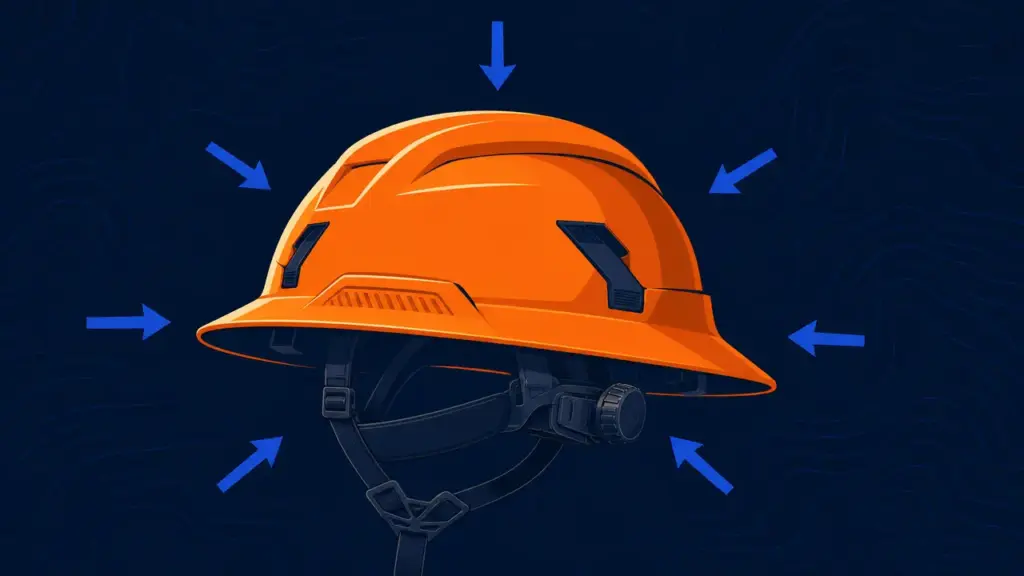
More construction owners and general contractors now require Type II safety helmets, which protect against side, front, and rear impacts as well as blows to the top of the head. OSHA does not require Type II, but it does require head protection that meets ANSI/ISEA Z89.1, so check your contract and owner rules before you buy.
What changed
For decades, the standard construction hard hat was a Type I, designed for impacts to the top of the head. Type II helmets also protect against off-center impacts. Both types are part of ANSI/ISEA Z89.1, but jobsite policy has been moving toward Type II. Three developments stand out:
- OSHA’s own move. OSHA announced that it was replacing traditional hard hats for its own employees with ANSI Z89.1 certified Type II safety helmets when they work on sites. Before that, it published a Safety and Health Information Bulletin on November 22, 2023 on head protection.
- Contractor mandates. Some general contractors have set effective dates after which Type II helmets with chin straps are required on all of their sites and traditional Type I hard hats are no longer permitted.
- A new edition of the standard. ANSI/ISEA Z89.1-2026 keeps the existing Type and Class classifications and adds optional “+” designations for helmets tested for chin strap performance, retention, and extra impact protection. The revision does not make currently compliant head protection obsolete.
Type I and Type II at a glance
| What to compare | Type I | Type II |
|---|---|---|
| Designed for | Impact to the top of the head. | Impact to the top and off center (sides, front, rear). |
| Penetration testing | Top of the helmet. | Top and off center. |
| Typical trade-off | Lighter. | Often heavier, because of the added impact protection. |
| Where it is required | Still accepted under OSHA. | Required on many owner and general contractor sites. |
Both types are also rated by electrical class: Class G (general, proof tested at 2,200 volts), Class E (electrical, 20,000 volts), and Class C (conductive, no electrical protection). Type is about impact. Class is about electrical exposure. Check both on the helmet label.
What OSHA actually requires
Construction head protection is covered by 29 CFR 1926.100, which requires protective helmets where there is a danger of head injury from falling or flying objects or from electrical shock. The helmet must meet the ANSI/ISEA Z89.1 standard or be shown to be at least as effective. OSHA does not design, test, or certify helmets, and it does not currently mandate Type II on private construction sites. Many owners and general contractors require it anyway through contract and site rules, and those rules apply to every trade partner on the project. Confirm the edition of the standard OSHA accepts in the current text of 1926.100 before you write a policy that cites it.
What the 2026 edition adds
The 2026 revision introduces optional Type I+ and Type II+ designations. Both require a chin strap and test chin strap retention and retention system effectiveness. A helmet only carries the “+” if the manufacturer tested to it. Type II remains what many site rules ask for today. If an owner’s spec mentions chin straps, ask whether it means a helmet with a strap fitted or a “+” rated helmet. They are not the same thing.
What to check on your project
- Read the contract and the owner’s safety requirements. They can be stricter than OSHA. Federal contracts and EM 385-1-1 projects have their own rules.
- Update the site PPE policy in writing. State the required Type, the electrical Class, and whether a chin strap is required, and say how long workers have to transition.
- Run the hazard assessment. Overhead work, work at height, tight spaces, and work near energized equipment each change what you need from a helmet.
- Check compatibility. Confirm that face shields, hearing protection, welding gear, and respirators fit the helmet your crews will wear.
- Plan for sizing and replacement. Follow the manufacturer’s inspection and replacement guidance and do not mix parts between brands.
- Brief the crews. Explain why the change is happening and how to fit and adjust the new helmets. Crews accept new PPE faster when they understand the reason.
- Audit the result. Walk the site after the transition date and look at the labels, not just the helmets.
Example of a Type II full brim helmet
A full brim style is one option for crews who want shade and rain coverage. As an example, the STUDSON SHK-1 full brim safety helmet is listed on Amazon as ANSI/ISEA Z89.1 Type II, Class E, with an NFC emergency contact chip. Treat the listing as the seller’s description and check the helmet’s own label before you buy for a site. Brim style does not change the Type or Class.
This is an affiliate link. As an Amazon Associate I earn from qualifying purchases.
Sources: ISEA head protection and ANSI/ISEA Z89.1-2026 · Engineering News-Record on OSHA and Type II helmets
Request a Safety Professional to discuss coverage for your project. CSP provides embedded safety leadership for construction and industrial projects.
Frequently asked questions
Is Type II required by OSHA?
No. OSHA requires head protection that meets ANSI/ISEA Z89.1 where there is a head injury hazard, and Type I still meets it. Many owners and general contractors require Type II through contract.
Do chin straps come with every Type II helmet?
No. A chin strap has been optional, with strength requirements only where one is fitted. The new “+” designations require one.
Do we have to replace every Type I hard hat right away?
Only if your owner or contract says so. Check the contract, set a transition date in your PPE policy, and keep a record.
Is a full brim helmet a Type II?
It can be. Brim style and Type are separate things. The label tells you the Type and Class.
Related links
Need a safety professional on your project?
Send a request. A safety professional will respond.